


Caffeine
Naturally contains caffeine
Matcha naturally contains caffeine. The amount varies by the tea and serving size, so it is worth keeping your own caffeine tolerance in mind.
Matcha guide
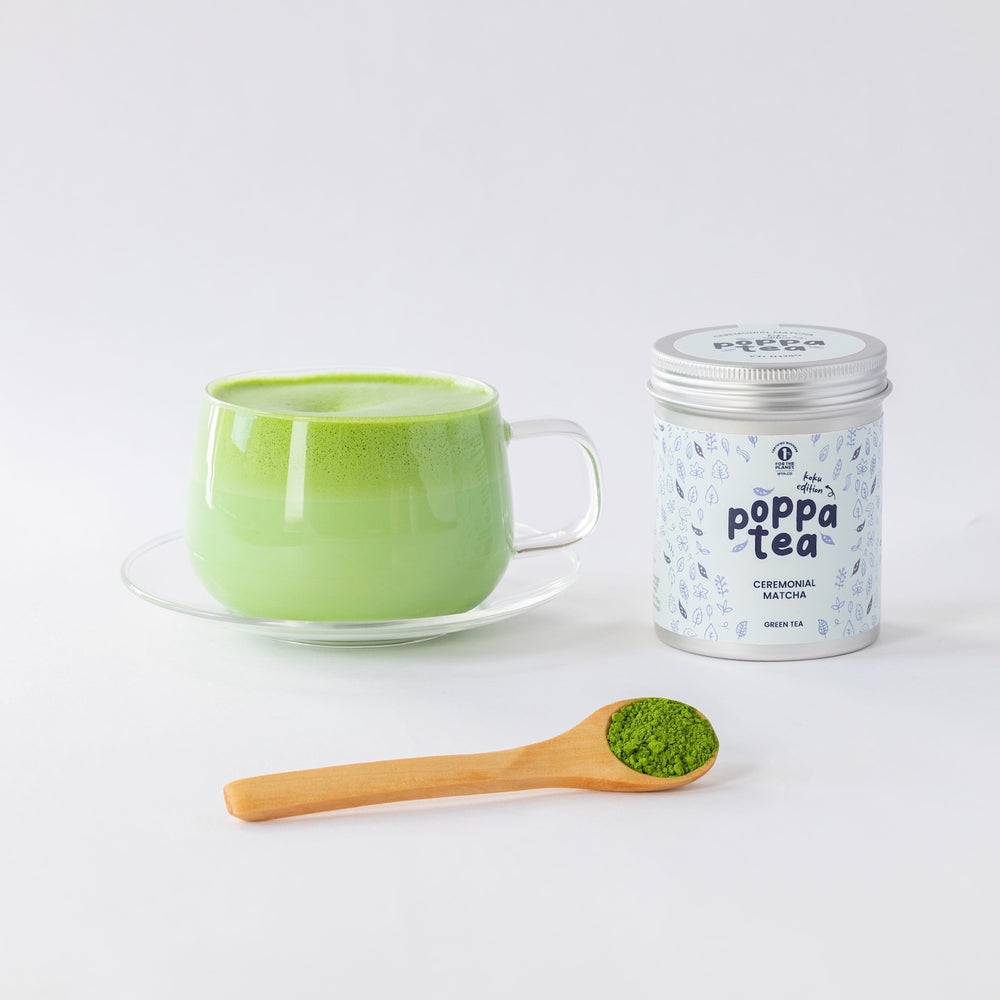
Matcha is finely ground green tea that naturally contains caffeine, L-theanine and tea polyphenols. Because the powder is whisked into the drink rather than steeped and removed, you consume the whole tea leaf.
What’s in the cup
There is plenty of hype around matcha. These are the simple, useful facts behind what makes it different from a regular brewed tea or coffee.
Caffeine
Matcha naturally contains caffeine. The amount varies by the tea and serving size, so it is worth keeping your own caffeine tolerance in mind.

Tea compounds
Like other green teas, matcha contains naturally occurring polyphenols, including tea catechins such as EGCG.

Whole leaf
Matcha is whisked into water or milk rather than steeped and removed, so the finely ground tea leaf becomes part of the drink.
Your routine
For many people, matcha is an enjoyable alternative to coffee or energy drinks, with its own flavour, preparation ritual and caffeine profile.

A useful combination
Matcha naturally contains both caffeine and L-theanine, an amino acid found in tea leaves. Both occur naturally in the same cup, but how you experience caffeine is individual.
Caffeine content varies between matchas and depends on how much powder you use.
If you are sensitive to caffeine, keep serving size and timing in mind.
Find your matcha
Compare origin, strength, flavour and best use across our matcha range.
 Italy
|
EUR
€
You are currently shipping to Italy and your order will be billed in EUR €.
 Austria
EUR
€
 Belgium
EUR
€
 Bulgaria
EUR
€
 Croatia
EUR
€
 Cyprus
EUR
€
 Czechia
CZK
Kč
 Denmark
DKK
kr.
 Estonia
EUR
€
 Finland
EUR
€
 France
EUR
€
 Germany
EUR
€
 Greece
EUR
€
 Hungary
HUF
Ft
 Ireland
EUR
€
 Latvia
EUR
€
 Lithuania
EUR
€
 Luxembourg
EUR
€
 Malta
EUR
€
 Netherlands
EUR
€
 Norway
NOK
kr
 Poland
PLN
zł
 Portugal
EUR
€
 Romania
RON
Lei
 Slovakia
EUR
€
 Slovenia
EUR
€
 Spain
EUR
€
 Sweden
SEK
kr
 Switzerland
CHF
CHF
 United Arab Emirates
AED
د.إ
 United Kingdom
GBP
£
 United States
USD
$